


When Architecture Becomes an Instrument

Sound, Space & the Nervous System
There are certain spaces that immediately change how we feel.
A quiet courtyard.
An ancient cathedral.
A stone temple.
A forest opening surrounded by trees.
Before a single word is spoken, the body responds.
The breath slows.
The mind softens.
The nervous system begins to regulate.
Why?
Because architecture has never only been visual.
Architecture is also acoustic.
Every material, ceiling height, angle, curve, corridor, and open space shapes the way sound moves through an environment — and in turn, shapes the human experience inside it.
Long before modern acoustical engineering, ancient civilizations understood that space could influence emotion, ceremony, communication, and even states of consciousness.
At its highest level, architecture becomes an instrument.
The Body Is Always Listening
Modern life is filled with constant mechanical noise:
traffic,
airplanes,
notifications,
HVAC systems,
construction,
sirens,
televisions,
crowded restaurants,
and overstimulating urban environments.
Most people don’t realize how much sound exposure impacts the nervous system.
The human body is continuously processing acoustic information, even when we are not consciously paying attention. Harsh, chaotic, and unpredictable sound environments can keep the nervous system in a heightened state of vigilance.
This is why certain spaces feel exhausting while others feel restorative.
The architecture itself influences the acoustic experience.
Ancient Structures Designed for Resonance

Great Pyramid of Giza
The pyramids continue to fascinate researchers because of their precision, scale, and unusual acoustic qualities.
Certain chambers within the Great Pyramid demonstrate unique resonance behaviors, where low frequencies reverberate and linger in surprising ways. Granite, heavily used inside the structure, contains quartz — a mineral associated with vibrational responsiveness.
Whether intentional or intuitive, the geometry of the pyramid creates a deeply immersive acoustic environment.
Many visitors describe the interior as unnaturally still, quiet, and meditative.
The structure does not simply hold space.
It shapes it.

Chartres Cathedral
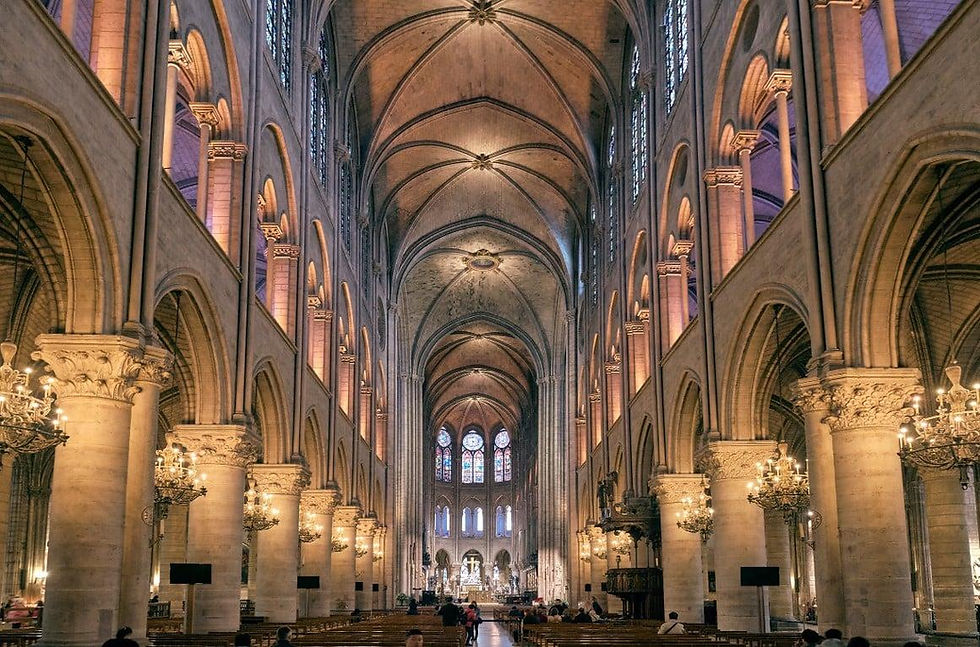
Gothic cathedrals were built for more than visual awe.
They were designed for resonance.
The vaulted ceilings, stone walls, arches, and immense vertical spaces create long reverberation times where chants, organs, and harmonic singing blend into a continuous field of sound.
In these spaces:
echoes soften speech
tones merge together
overtones become more apparent
silence itself feels alive
The architecture transforms sound into an immersive experience rather than simple communication.
The building becomes part of the instrument.

Epidaurus Theatre
The Theatre of Epidaurus is one of the most acoustically remarkable sites in the ancient world.
Built over 2,000 years ago, even a whisper near the stage can often be heard throughout the amphitheater.
Researchers believe this is due to:
precise geometric proportions
curved seating arrangements
natural sound filtering from limestone
amplification of frequencies associated with human speech clarity
What’s fascinating is that the structure naturally reduces chaotic crowd noise while enhancing coherent sound.
Ancient builders understood something modern society often forgets:
A healthy environment is not merely quiet.
It is acoustically balanced.

Courtyards, Calm & Noise Reduction
One of the most overlooked forms of acoustic design may be the courtyard.
Traditional courtyards found throughout Mediterranean, Middle Eastern, Japanese, and monastic architecture often create natural protection from external noise.
Enclosed spaces help:
diffuse harsh sound reflections
reduce urban noise exposure
soften echo patterns
regulate temperature and airflow
create a greater sense of psychological safety
This matters deeply for the nervous system.
Humans were never designed for nonstop mechanical stimulation.
When noise levels decrease, the body often shifts toward regulation:
heart rate slows,
breathing deepens,
and attention becomes more present.
This may explain why people instinctively feel calmer in certain architectural environments without fully understanding why.
The body recognizes coherence before the mind explains it.

Nature:
The Original Acoustic Architect
Nature may be humanity’s oldest acoustic teacher.
Forests absorb and diffuse sound through layers of leaves, bark, and irregular surfaces. Flowing water creates soothing broadband sound. Mountains and canyons create natural echoes and resonance chambers.
Unlike modern cities filled with flat reflective surfaces and mechanical noise, natural environments tend to produce more organic and balanced acoustic experiences.
This is one reason nature often feels restorative.
Not only because of what we see — but because of what we hear.

Final Reflection
Modern architecture often prioritizes efficiency, density, and visual design while overlooking the human acoustic experience.
But ancient cultures seemed to understand something profound:
Sound shapes the body.
Space shapes sound.
Therefore, space shapes us.
Perhaps architecture was never meant to simply contain human life.
Perhaps it was meant to tune it.


Comments